How Interactive 3D Anatomy Improves Surgical Education
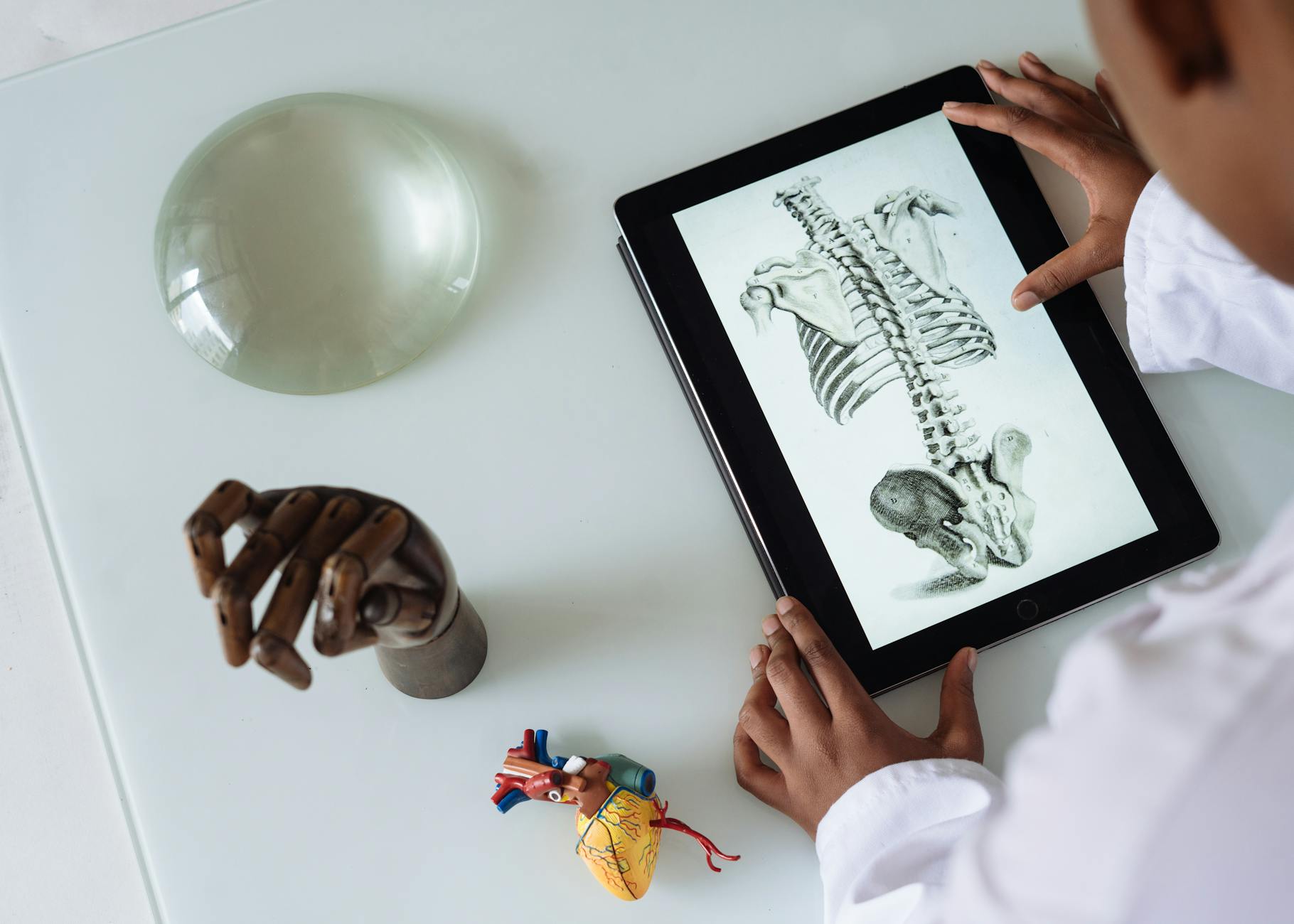
Explore how interactive 3D anatomy enhances surgical education by improving spatial understanding, engagement, and practical skills for medical residents.
# How Interactive 3D Anatomy Improves Surgical Education
Surgical education is a complex and demanding field that requires a deep understanding of human anatomy, precise technical skills, and the ability to make critical decisions under pressure. Traditional teaching methods, such as textbooks, cadaver dissections, and 2D images, have been foundational but present limitations in conveying the three-dimensional complexity of human anatomy.
Interactive 3D anatomy tools are transforming surgical education by providing immersive, dynamic, and detailed visualizations that enhance learning and skill acquisition. This article explores the benefits and applications of interactive 3D anatomy in surgical training, highlighting how it improves spatial understanding, engagement, and clinical competence.
Limitations of Traditional Anatomy Education
- Static 2D Images: Textbooks and atlases present anatomy in flat, two-dimensional views, which can hinder comprehension of spatial relationships.
- Cadaver Dissection Constraints: While invaluable, cadaver labs are limited by availability, preservation issues, and lack of physiological function.
- Passive Learning: Lectures and demonstrations often encourage passive intake rather than active exploration and problem-solving.
Advantages of Interactive 3D Anatomy in Surgical Training
### Enhanced Spatial Understanding
- True 3D Visualization: Trainees can rotate, zoom, and dissect virtual anatomical structures to understand their spatial orientation.
- Layered Exploration: Ability to peel away layers such as skin, muscles, vessels, and organs to appreciate anatomical depth and relationships.
- Dynamic Simulation: Visualization of physiological processes and pathological changes in real time.
### Increased Engagement and Retention
- Active Learning: Interactive platforms encourage users to manipulate models, fostering deeper cognitive processing.
- Self-Paced Study: Learners can revisit complex structures repeatedly, accommodating different learning speeds.
- Gamification Elements: Quizzes, challenges, and simulations increase motivation and reinforce knowledge.
### Improved Surgical Skill Development
- Preoperative Planning: Surgeons can rehearse procedures on patient-specific 3D models, improving confidence and precision.
- Safe Environment: Allows practice of complex techniques without risk to patients.
- Integration with Simulation: Combines anatomy learning with procedural simulations for comprehensive training.
Practical Applications in Surgical Education
### Medical Residency Programs
Residency programs incorporate interactive 3D anatomy to supplement traditional teaching, helping residents:
- Master complex anatomical regions such as the head and neck, pelvis, and cardiovascular system.
- Understand anatomical variations that impact surgical approaches.
- Prepare for board examinations with realistic case scenarios.
### Continuing Medical Education (CME)
Practicing surgeons use 3D anatomy tools for CME to:
- Update knowledge on new surgical techniques.
- Review rare or complex cases.
- Enhance decision-making skills through interactive case studies.
### Interdisciplinary Collaboration
3D anatomy platforms facilitate communication among surgical teams, radiologists, and other specialists by providing a common visual reference.
Key Features of Effective Interactive 3D Anatomy Tools
- High-Resolution Models: Accurate and detailed representations of anatomical structures.
- User-Friendly Interface: Intuitive controls for easy navigation and manipulation.
- Customizability: Ability to highlight, annotate, and simulate various clinical conditions.
- Compatibility: Integration with surgical simulation platforms and VR/AR devices.
Challenges and Considerations
- Cost and Accessibility: High-quality 3D anatomy software may require significant investment.
- Learning Curve: Users need orientation to maximize tool benefits.
- Complementary Use: Should augment, not replace, hands-on experience and traditional methods.
Future Directions
Advancements in technology continue to enhance the realism and interactivity of 3D anatomy tools. Integration with augmented reality (AR) and virtual reality (VR) is expanding opportunities for immersive surgical training. Personalized models based on patient imaging data are improving preoperative planning and outcomes.
Conclusion
Interactive 3D anatomy is revolutionizing surgical education by bridging the gap between theoretical knowledge and practical skills. By fostering enhanced spatial understanding, active engagement, and safe skill development, it prepares medical residents and surgeons for the complexities of modern surgical practice. Incorporating these tools into training curricula promises to improve surgical proficiency and ultimately patient care.
---
Key Takeaways:
- Interactive 3D anatomy enhances spatial comprehension beyond traditional 2D methods.
- Active engagement with 3D models leads to better retention and understanding.
- Surgical simulation combined with 3D anatomy improves procedural skills.
- Integration into residency and CME programs supports lifelong learning.
- Challenges include cost and ensuring complementary use with hands-on training.
Embracing interactive 3D anatomy tools is essential for the evolution of surgical education in the 21st century.